Call us: +255 659 122 583
Private Safari vs Group Safari in Tanzania: Which One Should You Book?
When planning a Tanzania safari, one of the biggest decisions...
Read More
Call us: +255 659 122 583
Serengeti National Park is one of the most famous safari destinations in Africa — and for many travelers, it is the place they imagine first when they dream of a Tanzania safari.
Wide golden plains.
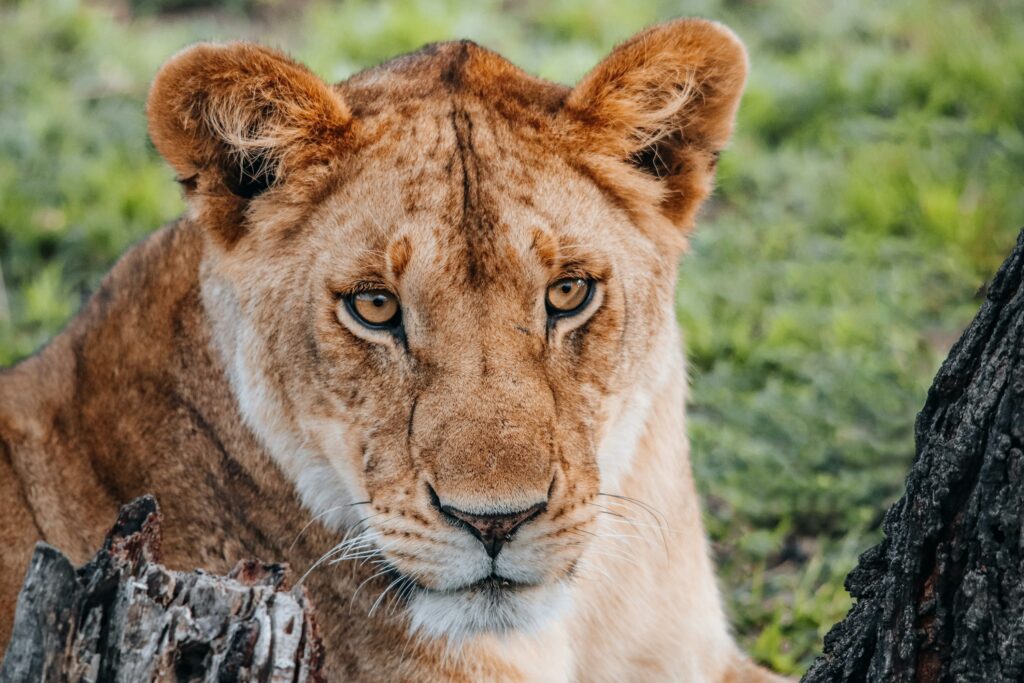
Big cats resting in the shade.
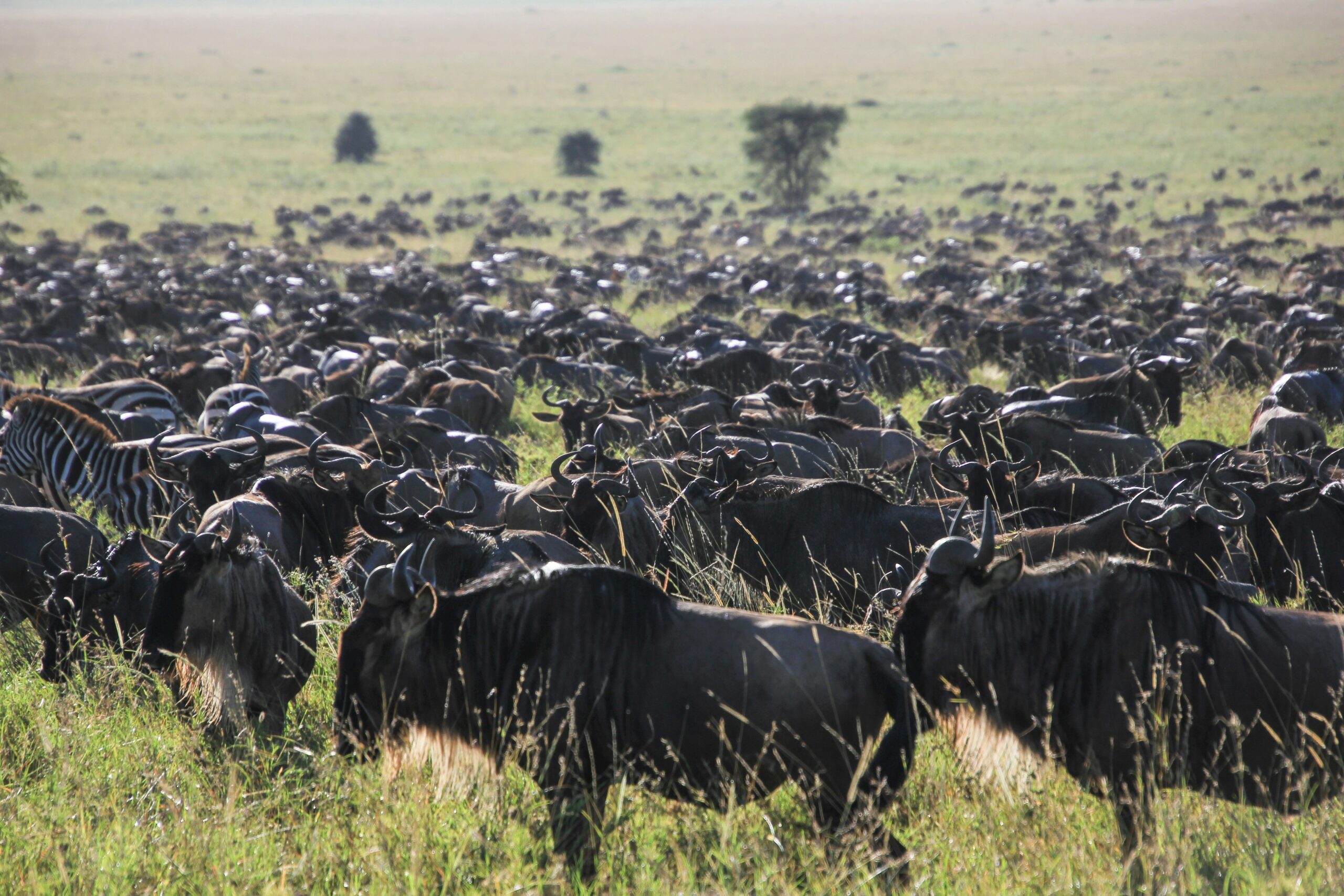
Wildebeest and zebras moving across open landscapes.
Sunrise game drives.
Quiet evenings at camp after a day in the wild.
The Serengeti is not just a destination you visit. It is a place you feel.
Located in northern Tanzania, Serengeti National Park is known for its endless plains, rich wildlife, big cat sightings, and the Great Migration. TANAPA describes the Serengeti as one of the most famous wildlife areas in the world and notes that the Maasai name “Siringet” means “wide endless plains.”
For first-time safari travelers, Serengeti is often the highlight of the entire journey. But to enjoy it properly, you need to understand when to visit, how many days to stay, what wildlife to expect, and how to combine it with other Tanzania destinations.
This guide will help you plan your Serengeti safari with confidence.
Yes — Serengeti is absolutely worth visiting.
It is one of Tanzania’s strongest safari destinations and one of the most iconic wildlife areas in the world. Tanzania’s official tourism website highlights Serengeti safari experiences, Big Five encounters, and the Great Migration as key reasons travelers visit Tanzania.
Serengeti is best for travelers who want:
If this is your first safari in Tanzania and you have enough time, Serengeti should strongly be part of your itinerary.
Serengeti National Park is located in northern Tanzania and forms part of the larger Serengeti ecosystem. UNESCO describes Serengeti National Park as being at the heart of the wider Serengeti ecosystem, which is defined by the area covered by the annual migration.
Most Serengeti safaris start from Arusha, which is the main gateway for northern Tanzania safari routes.
A typical northern safari route may include:
Arusha → Tarangire → Serengeti → Ngorongoro → ArushaOr, for a safari and beach combination:
Arusha → Tarangire → Serengeti → Ngorongoro → ZanzibarBecause Serengeti is farther from Arusha than parks like Tarangire or Lake Manyara, it is better to give it enough time. Trying to rush Serengeti into a very short safari can make the journey feel too tiring.
Serengeti is famous for three main reasons:
The park is also internationally recognized. UNESCO lists Serengeti National Park as a World Heritage Site and describes the wider ecosystem as including important protected areas such as Ngorongoro, Maswa, Grumeti, Ikorongo, Maasai Mara, and Loliondo.
But beyond the facts, Serengeti is famous because it gives travelers the feeling of being deep inside wild Africa.
You can drive for long stretches through open plains, watch lions lying near the track, see giraffes moving across the horizon, and experience landscapes that feel almost endless.
That is why many travelers consider Serengeti the heart of a Tanzania safari.
Serengeti can be visited throughout the year, but the best time depends on what you want to experience.
Some travelers want general wildlife viewing.
Some want the Great Migration.
Some want fewer crowds.
Some want greener landscapes and photography.
Here is a simple guide.
June to October is one of the most popular times to visit Serengeti.
This is the dry season in much of northern Tanzania. Wildlife is often easier to spot because vegetation is thinner, and animals gather around water sources.
This period is good for:
If you are planning your first Tanzania safari and want a reliable period for wildlife viewing, June to October is a strong choice.
January to March is an excellent time for travelers interested in the Great Migration calving season.
During this period, the southern Serengeti and Ndutu area can become especially active with wildebeest calves, predators, and dramatic wildlife interactions. Serengeti.com describes the migration as starting in the south of the Serengeti, with the birth of around half a million calves between January and March.
This period is good for:
If you want a dramatic and emotional wildlife experience, calving season can be one of the most memorable times to visit.
November and December usually bring short rains, depending on the year.
This can be a beautiful time for photography because the landscape becomes greener, skies can be dramatic, and there may be fewer travelers compared with peak season.
This period can be good for:
Safari is still possible, but routes and wildlife movement depend on the season.
April and May are often considered the long rainy season in Tanzania.
Some travelers avoid this period because of rain, but it can also offer advantages: fewer crowds, lush landscapes, and sometimes better value depending on accommodation.
This period can be good for:
However, some roads may become more challenging, and not every camp operates in the same way during this season. If you are a first-time visitor, speak with a safari expert before choosing these months.
The Great Migration is one of the biggest reasons travelers choose Serengeti.
But one important thing to understand is this:
The migration is not in one place all year.
It moves through different areas of the Serengeti ecosystem depending on rainfall, grazing, and season. UNESCO describes the Serengeti ecosystem as being defined by the area covered by the annual migration.
A simple migration guide looks like this:
| Period | General Migration Area |
|---|---|
| January to March | Southern Serengeti / Ndutu calving season |
| April to May | Moving through central and western areas |
| June to July | Western corridor and movement north |
| July to October | Northern Serengeti / Mara River area |
| November to December | Movement back toward southern plains |
This is a general guide, not a fixed calendar. Wildlife movement depends on rainfall and conditions each year.
If the Great Migration is your main reason for visiting, your itinerary should be designed around the right area of Serengeti for your travel month.
Serengeti is one of the best wildlife destinations in Tanzania.
Depending on the season and area, you may see:
TANAPA describes Serengeti as a world-renowned wildlife sanctuary with the largest remaining large mammal migration in the world, rich species diversity, and Big Five wildlife.
One of the biggest attractions of Serengeti is big cat viewing.
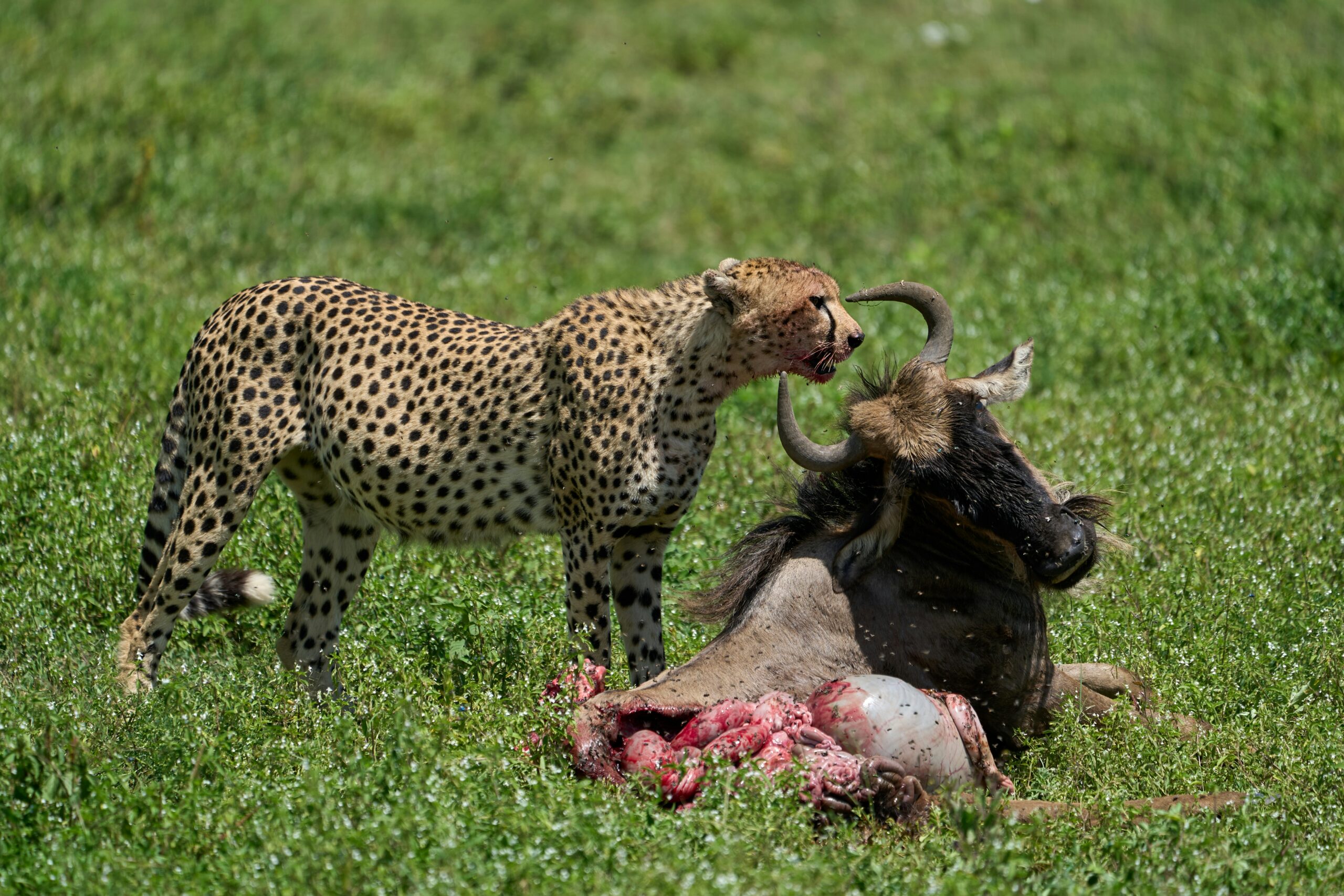
The open plains make it a strong destination for seeing lions and cheetahs, while leopards are often found around riverine areas and trees.
For photographers and wildlife lovers, Serengeti can be incredibly rewarding because sightings often happen in dramatic landscapes.
Serengeti is home to many famous safari animals, including members of the Big Five.
The Big Five are:
Lion
Leopard
Elephant
Buffalo
Rhino
In Serengeti, lions, leopards, elephants, and buffalo may be seen depending on the area and luck. Rhinos are much harder to see and are not usually the main reason travelers visit Serengeti.
If seeing rhino is important to you, combining Serengeti with Ngorongoro Crater is usually a stronger plan.
That is why many Tanzania safari itineraries combine:
Serengeti + NgorongoroSerengeti gives you wide plains and big safari drama. Ngorongoro gives you a compact and powerful wildlife experience.
For Serengeti, you should plan at least 2 nights inside or near the park if possible.
For the full northern Tanzania route, most travelers need at least 5 days total to include Serengeti properly.
Here is a simple guide:
| Total Safari Length | Serengeti Experience |
|---|---|
| 3 days | Usually too rushed |
| 4 days | Possible, but tight |
| 5 days | Good introduction |
| 6–7 days | Better and more relaxed |
| 8+ days | Excellent for migration or deeper safari |
If Serengeti is your main dream, choose at least a 5-day safari. If you want a better pace and more game drive time, choose 6 or 7 days.
Here are some simple Serengeti itinerary ideas.
This is a good first-time route for travelers who want Serengeti and Ngorongoro but do not have a full week.
Day 1: Tarangire National Park
Day 2: Drive to Serengeti
Day 3: Full day in Serengeti
Day 4: Serengeti to Ngorongoro area
Day 5: Ngorongoro Crater and return to Arusha
Best for:
Suggested package:
5 Days Classic Northern Tanzania SafariThis is better for travelers who want more time in Serengeti.
Day 1: Arrival in Arusha
Day 2: Tarangire National Park
Day 3: Drive to Serengeti
Day 4: Full day in Serengeti
Day 5: Serengeti to Ngorongoro area
Day 6: Ngorongoro Crater and return to Arusha
Best for:
Suggested package:
6 Days Serengeti Migration SafariThis is one of the best balanced routes for first-time visitors.
Day 1: Arrival in Arusha
Day 2: Tarangire National Park
Day 3: Lake Manyara or cultural experience
Day 4: Serengeti National Park
Day 5: Full day in Serengeti
Day 6: Ngorongoro area
Day 7: Ngorongoro Crater and return to Arusha
Best for:
Suggested package:
7 Days Northern Circuit Safari & CultureThis is ideal if you want to combine Serengeti with beach relaxation.
Day 1: Arrival in Arusha
Day 2: Tarangire National Park
Day 3: Serengeti National Park
Day 4: Full day in Serengeti
Day 5: Ngorongoro Crater
Day 6: Fly to Zanzibar
Day 7: Zanzibar beach relaxation
Day 8: Departure
Best for:
Suggested package:
8 Days Safari & Zanzibar EscapeThere are two main ways to reach Serengeti: by road or by flight.
Driving is common on northern Tanzania safaris.
The route often passes through beautiful landscapes and can include stops such as Tarangire, Lake Manyara, Karatu, and Ngorongoro.
Driving is good for:
The downside is that some travel days are long.
Flying into Serengeti is faster and more comfortable.
This can work well for luxury travelers, honeymooners, or guests with limited time.
Flying is good for:
The downside is cost. Flying usually increases the total safari price.
For many first-time visitors, a road safari is a good and meaningful experience. For travelers who want more comfort or have a higher budget, fly-in options can be excellent.
Serengeti is powerful on its own, but it becomes even better when combined with other Tanzania destinations.
This is the classic combination.
Serengeti gives you wide plains, migration, and big cats. Ngorongoro gives you dramatic scenery and concentrated wildlife viewing.
Best for:
This combination adds variety.
Tarangire is known for elephants, baobab trees, and seasonal wildlife concentration. It feels different from Serengeti, which makes the overall safari more interesting.
Best for:
Lake Manyara adds lake scenery, forest, birds, monkeys, and Rift Valley views.
It is a good soft contrast to Serengeti’s open plains.
Best for:
This is one of Tanzania’s most beautiful combinations.
After the excitement of safari, Zanzibar offers beaches, Stone Town, spice tours, snorkeling, seafood, and relaxation.
Best for:
Yes, Serengeti is excellent for first-time safari travelers.
It gives the classic safari feeling many people imagine before they come to Africa: open landscapes, wildlife-filled plains, big cats, and unforgettable game drives.
However, Serengeti is best when it is not rushed.
If this is your first safari and you only have 2 or 3 days, it may be better to visit Tarangire, Ngorongoro, or Lake Manyara instead.
If you have 5 days or more, Serengeti becomes a strong choice.
Yes, Serengeti is a wonderful honeymoon destination.
It offers privacy, beautiful camps, romantic landscapes, and unforgettable wildlife moments. Many couples combine Serengeti with Zanzibar for the perfect mix of adventure and relaxation.
A honeymoon safari could include:
Serengeti + Ngorongoro + ZanzibarThis gives you wildlife, scenery, comfort, and beach time.
Yes, Serengeti can be excellent for families, especially if the itinerary is planned with enough time and comfortable accommodation.
For families, it is better to avoid rushing. A 6 or 7-day safari can feel more comfortable than a shorter route because children have time to rest between travel days and game drives.
Family-friendly planning should consider:
A private safari is usually a good choice for families because the daily pace can be adjusted.
For Serengeti, pack light but smart.
Useful items include:
Early morning game drives can be cool, while midday can be warm. Layers are helpful.
Avoid very bright colors on safari, and keep your luggage practical, especially if your itinerary includes internal flights.
Serengeti needs time.
If you try to rush it into a very short itinerary, you may spend more time traveling than enjoying the park.
If you are planning around the Great Migration, the season matters.
Different areas of Serengeti are better at different times of year.
A cheaper Serengeti safari may reduce time in the park, use less convenient accommodation, or involve rushed routing.
Value matters more than just the lowest price.
Serengeti works best when combined with the right destinations.
For first-time visitors, Ngorongoro and Tarangire are usually strong additions.
Safari is real nature. Animals move, weather changes, and sightings are never guaranteed.
A good guide, enough time, and a well-designed route improve your chances.
For most first-time travelers who want Serengeti, we recommend at least a 5-day Tanzania safari.
If your budget and time allow, choose 6 or 7 days.
That gives you more time in the park, better pacing, and a richer safari experience.
For honeymooners or travelers who want a complete Tanzania journey, combine Serengeti with Zanzibar.
A good plan could be:
5–7 days safari + 3–5 days ZanzibarThis creates a beautiful balance of wildlife adventure and beach relaxation.
A strong first-time safari including Serengeti and Ngorongoro.
This is ideal if you want Tanzania’s major northern highlights in a manageable itinerary.
A better choice for travelers who want more time in Serengeti and a stronger wildlife focus.
This package is especially useful for guests interested in seasonal migration experiences.
A balanced itinerary combining wildlife, landscapes, and cultural moments.
This is ideal for travelers who want a more relaxed pace and a deeper first safari.
A beautiful combination of Serengeti safari adventure and Zanzibar beach relaxation.
This is a strong choice for honeymooners, couples, families, and travelers who want wildlife and the coast in one journey.
Serengeti National Park is one of the great safari destinations of Africa.
It is famous for the Great Migration, big cats, endless plains, and unforgettable wildlife viewing. But what makes Serengeti special is not only what you see. It is how the place feels.
The silence before sunrise.
The sound of the vehicle moving through the plains.
The patience of watching lions rest under the sun.
The excitement when your guide spots movement in the grass.
The feeling of standing in a landscape that seems to go on forever.
If you are planning your first Tanzania safari and you have enough time, Serengeti is one of the best places to include.
Give it at least 5 days within your safari route. Choose 6 or 7 days if you want a more relaxed and rewarding experience. Add Zanzibar if you want to end your journey with beach relaxation.
With the right planning, Serengeti can become the heart of your Tanzania adventure.
Dreaming of a Serengeti safari but not sure when to go or how many days you need?
Tell Safari Coyote Adventures your travel dates, travel style, budget, and dream experience. Our team will help you design a private Tanzania safari that includes Serengeti in the right way — with enough time, comfort, and careful planning.
Whether you want a classic northern safari, a migration-focused itinerary, or a Serengeti and Zanzibar escape, we can help you plan your journey step by step.
Request a Custom Serengeti Safari PlanYes, Serengeti National Park is one of the best safari destinations in Tanzania. It is famous for wildlife, big cats, open plains, and the Great Migration.
The Serengeti can be visited year-round. June to October is excellent for classic dry-season wildlife viewing, while January to March is especially good for calving season in the southern Serengeti and Ndutu area.
You should plan at least 2 nights inside or near Serengeti if possible. For a full Tanzania safari route that includes Serengeti, 5 days is a good minimum, while 6 to 7 days is better.
Yes, the Great Migration moves through the Serengeti ecosystem during the year. The best area depends on the month, so your safari route should be planned around your travel dates.
Yes, Serengeti is excellent for first-time safari travelers if you have enough time. If you only have 2 or 3 days, closer parks like Tarangire and Ngorongoro may be better.
Yes, Serengeti and Zanzibar are a great combination. Many travelers choose a safari first, then fly to Zanzibar for beach relaxation.
Both are excellent but different. Serengeti is best for open plains, big cats, migration, and multi-day safari experiences. Ngorongoro is best for dramatic scenery and concentrated wildlife viewing in a shorter time.
When planning a Tanzania safari, one of the biggest decisions...
Read MoreAfter days of early morning game drives, dusty safari roads,...
Read MoreSerengeti National Park is one of the most famous safari...
Read MoreWhatsApp us